

AI assistants are becoming a primary discovery channel. When someone asks ChatGPT, Perplexity, or Gemini for a recommendation, brands that appear in those answers win attention before a traditional search click ever happens.
That shift is often called Answer Engine Optimization (AEO) or AI search visibility: making sure your brand is accurately represented, cited, and preferred when large language models answer buyer questions.
Why does AI search visibility matter?
Traditional SEO optimizes for ranking on a results page. AI search optimizes for being selected inside a synthesized answer. Visibility gaps show up as:
| Gap type | What buyers see |
|---|---|
| Share-of-voice loss | Competitors cited more often for category questions |
| Fact drift | Outdated or incorrect brand facts in model responses |
| Authority weakness | Thin signals across review sites, Wikipedia, and news |
WorldBrand's research tools on WorldBrand.ai help teams quantify those gaps and act on them.
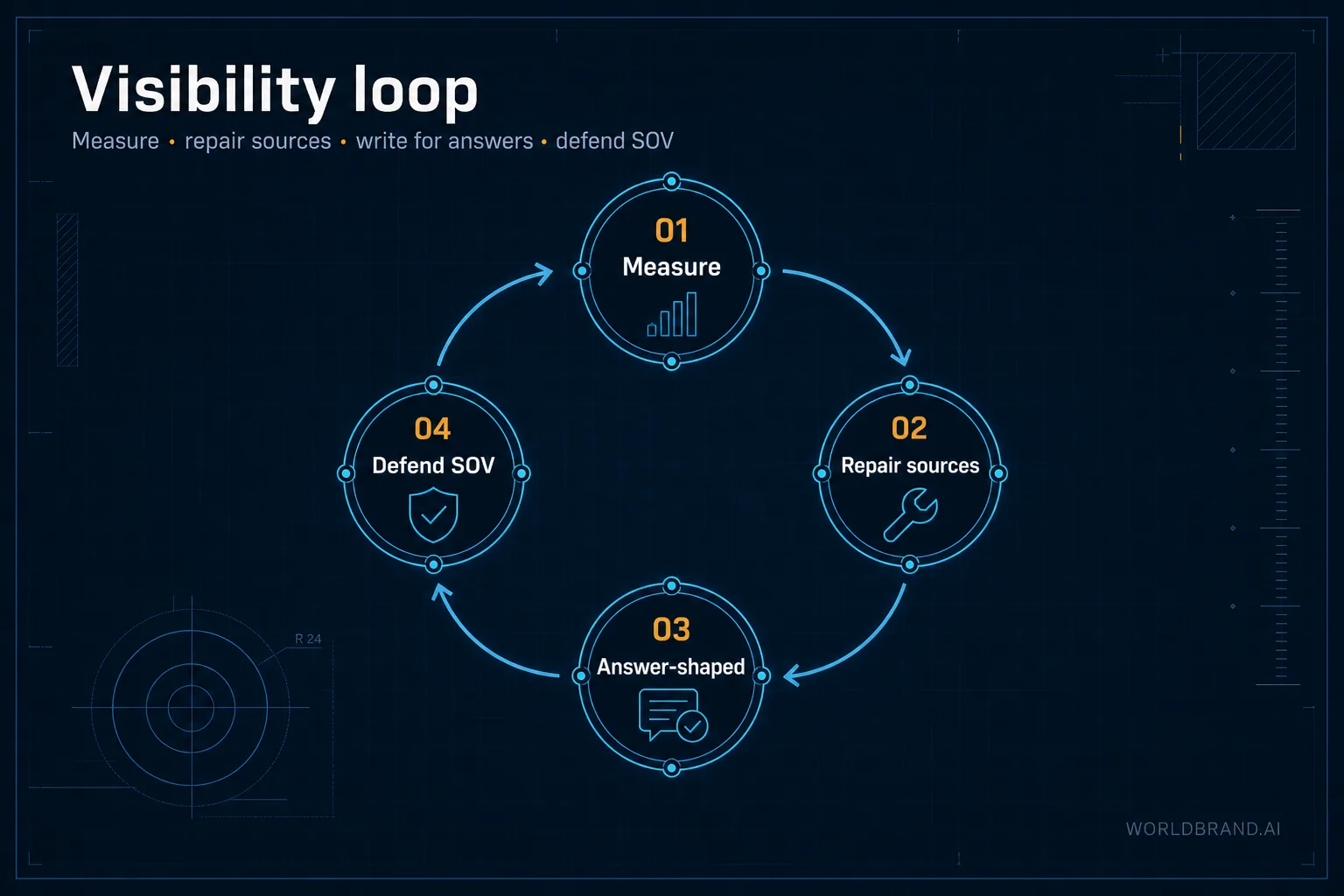
Step 1: Measure baseline visibility
Start by tracking how often AI systems mention your brand for a fixed set of prompts—category queries, comparison queries, and "best of" questions that your buyers actually ask.
| Metric | What it tells you |
|---|---|
| Mention rate | Share of prompts where your brand appears |
| Share of voice | Your mentions vs. competitors |
| Sentiment | Whether the framing is positive, neutral, or negative |
| Citation sources | Which URLs models lean on when they recommend you |
AEO Intelligence is built for this: recurring snapshots across major AI platforms so you can see trends, not one-off anecdotes.
Which sources do AI models trust?
Models heavily weight structured, authoritative, and frequently updated sources. Prioritize:
- Clear brand facts on your site (About, product pages, FAQ schema)
- Third-party encyclopedic coverage (company Wikipedia / Brand Wiki-style entries)
- Consistent naming across press, directories, and social profiles
- High-quality comparisons and category content that answer real buyer questions
Use the Brand Wiki to see metrics, valuation context, and wiki insights in one place—then close the gaps that AI systems are reading.
How should content align with answer-shaped queries?
Write for questions, not only keywords. Strong AEO content tends to:
- Lead with a direct answer in the first paragraph
- Use scannable headings that match natural language questions
- Include definitions, comparisons, and evidence (data, dates, named sources)
- Keep facts current—stale pages get ignored by both crawlers and models
AEO is not a one-time SEO tweak—it is ongoing evidence repair and category positioning inside synthesized answers.
How do you monitor and defend share of voice?
AI visibility is not a one-time campaign. Prompt sets evolve, competitors publish, and model training data shifts. Set a cadence:
- Weekly or monthly visibility snapshots for core prompts
- Alerts when mention rate or sentiment drops
- Content updates tied to the sources models actually cite
Pair this with From Snapshot to Operating Rhythm so measurement produces tickets—not another slide.
FAQ
Who should own the visibility improvement loop?
Name an AEO DRI—usually brand ops or a growth lead—who locks the prompt set, runs weekly snapshots, and refuses to close the rhythm without repair tickets. Marketing leadership reads the note; they do not substitute for an operating owner.
What should we fix before publishing new campaign copy?
Start with URLs models already cite: accurate specs and pricing on owned pages, consistent naming across directories, and citeable comparison content. Repairing stale or conflicting public facts often moves mentions faster than volume plays.
What is the most common anti-pattern?
One-off visibility checks that produce anecdotes, then a launch film with no evidence repair. Pilots die when there is no locked prompt set, no citation audit, and no Tuesday scoreboard.
How do we attach visibility work to meetings we already run?
Steal 90 minutes from an existing ops or growth ritual, put the locked prompt scoreboard first, and cap WIP so the hour produces repairs—not another readout.
Getting started on WorldBrand.ai
If you want a structured workflow:
- Explore AEO Intelligence to audit AI visibility, narrative, sources, and competitive presence
- Check Brand Wiki for structured brand coverage that models often reference — e.g. Apple Inc. or Nongfu Spring
- See World Model for the forthcoming decision layer built on that evidence
AI search will not replace every traditional SEO tactic—but teams that measure and improve how assistants talk about their brand will compound advantage as more buying journeys start in chat.
Visibility compounds when measurement enters a rhythm with owners—not when someone opens the dashboard once and calls it a program.